Ahmed Rushdi
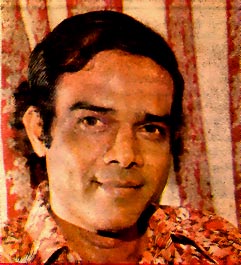 Ahmed Rushdi( April 24, 1934 – April 11, 1983) was a versatile Pakistani playback singer who worked in film music and was “an important contributor to the Golden Age of Pakistani film music.” Born in Hyderabad Deccan, he migrated to Pakistan and became a leading singer in the Pakistan film industry. He is considered to be one of the most versatile singers of the subcontinent and was capable of singing variety of songs. He is also considered to be the first regular pop singer of south asia and credited as having sung the “first-ever South asian” pop song, “Ko-Ko-Ko-reena.” In 1954, he recorded the official National anthem of Pakistan with several other singers. Rushdi has recorded the highest number of film songs in the history of Pakistani cinema. He suffered from poor health during the latter part of his life and died of a heart attack at the age of 48, after recording approximately five thousand film songs for 583 released films. Besides popular music, Rushdi also helped popularize the ghazals of Naseer Turabi.
In 2003, 20 years after his death, Pakistani president Pervez Musharraf awarded him the Sitara-e-Imtiaz, the “star of excellence,” an honour given for distinguished merit in the fields of literature, arts, sports, medicine, or science. A street in “Gulshan-e-Iqbal”, Karachi, also named “Ahmed Rushdi Road.”.
Early life
Ahmed Rushdi was born to a religious, conservative family of Hyderabad Deccan in 1934. His father, Syed Manzoor Ahmed, taught Arabic and Persian at Aurangabad College, Hyderabad, Deccan, and died when Rushdi was only six years old. From a young age, Rushdi was fond of listening to the musical programs, including songs, which were broadcast from the radio. He neither inherited music from any one, nor any body in his family was ever affiliated to music. Ahmed Rushdi’s singing talents impressed a very close friend of Ahmed Rushdi’s father, whom Ahmed Rushdi called uncle and who loved him dearly. He enrolled in a local music academy in Hyderabad Deccan. Moreover, two popular composers of the time, M.A. Rauf and Iqbal Qureshi, also taught music in the same school. Thus, Ahmed Rushdi learned the basics of music from the afore-mentioned teachers.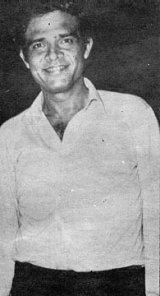
This fact is on record that Rushdi did not get any sort of formal training of classical singing but his God gifted tallents, expressive voice and grip over high notes brought a unique place for him in music industry. He sang his first song in the Indian film Ibrat in 1952 and got well recognition. His family moved to Pakistan and settled in Karachi in 1954, where he began participating in variety shows, music programs, and children’s programs on radio. In 1954, he recorded his first non-film song, “Bunder Road se Keemari,” written by Mehdi Zaheer for the popular Radio Pakistan show Bachchon Ki Duniya; the song was a hit and became the steppingstone for Rushdi’s future.
Movie career
After the success of “Bunder Road se Keemari,” Rushdi was offered songs as a playback singer for films and quickly gained popularity. He got recognition for singing “Mari lela ne aisi” in Anokhi (1956) and “Chalak Rahi Hain Mastiyan” and “Chal Na Sakey Gi 420″ in Raaz (1959). In 1961, he sung the popular song “Chand Sa Mukhra Gora Badan” in the film Saperan, for which he received his first Nigar Award as Best Male Playback Singer. He further strengthened his status as one of the top male playback singers in Mehtaab (1962), in which he sang “Gol Gappay Wala Aaya” for actor Alauddin; they would again be teamed in Susral. In 1966, he sang “Cococoreena,” considered the first modern Pakistani pop song.
Film Anchal (1962) was an important film in Rushdi’s career. Music director Khalil Ahmed recorded an extremely sad number “Kisi chaman mei raho tum” in singer Saleem Raza’s voice but wanted Rushdi to re-record the song as he was not satisfied with Saleem Raza’s singing. Rushdi did so and the song is still considered one of the best songs of his career. Raza’s career as a singer was effected and doomed later on. After that, when ever Khalil composed music for any film, Rushdi remained his first choice. Mid 1960s saw the rise of brilliant singers like Mehdi Hassan and Masood Rana, but it did not effect Rushdi’s career and he kept on leading the film music.
All film experts are unanimous that Rushdi’s voice was best suited for every hero, comedian and even character actor. He lent his voice to Waheed Murad, Nadeem, Syed Musa Raza (Santosh Kumar), Darpan, Habib, Rehman, Ghulam Mohiuddin and was tailor made for every actor of film industry. Rushdi’s voice was even ideally suited to comedians such as Munawwar Zarif, Lehri, Nirala, Nanha and Rangila. In fact, Rushdi’s songs had a tremendous impact on the success of those movies.
Rushdi recorded the ghazal “Shok-e-awargi” written by famous poet Habib Jalib for actor Kamal in the 1963 film “Joker”. This ghazal sung by Rushdi, is still considered one of the best film ghazals in subcontinent film industry. Rushdi and Jalib again teamed together for Mohammad Ali in the film “Khamosh Raho”(1964). Rushdi sang the famous ghazal “Mei Nahi Manta” for the same film and gained Habib Jalib country wide fame. He recorded a Qawwali “Madiney waley ko mera salam kehdena” along with Munir Husain same year.
Actor Nadeem’s first film as a leading actor was “Chakori” (1967). Rushdi recorded four songs for this film in the composition of music director Robin Ghosh. “Kabhi toe tum ko yaad ayen gi”, “Pyare pyare yar humare” and “Tujhe chahein meri bahein”. Same year, film Doraha and Shehnai were released. He recorded all the songs for these films including “Bhooli hue hoon dastan”, “tumhein kaise bta doon”, “Han issi mor per” (film Doraha) and “Tujhey apney dil se mei kaise”, “Nazaron se haseen hai”, “Dunya mei tumko jeena hai agar” ( film Shehnai).
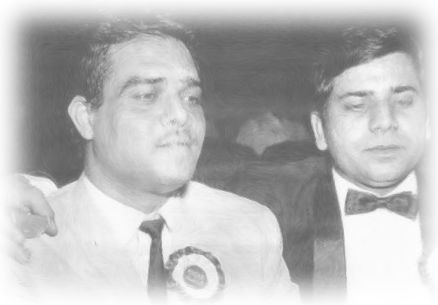 In 1968, Rushdi recorded his first ever Bengali song in the film Notun Name Dako of Dhaka titled “Ke Tumi Ele Go”, which became a smashing hit in the then East Pakistan. He sang playback hits in the same year like “Ae mere diwaney dil” (film Jahan tum wahan hum), “Socha tha pyar na karein ge” (film Ladla), “Usey dekha usey chaha usey bhool gaye” (film Jahan tum wahan hum), “Teri aankhon ke bheegey sitarey” (film Ma Beta) and many more.
Rushdi sang for Waheed Murad in 1969 film “ Naseeb Apna Apna”. The song “Ae abr-e-kaaram aaj itna baras” brought another Nigar award for him. The song was composed by Lal Mohammad Iqbal. He also won different awards for songs like “Dil tumko de diya hai” and “Hum se na bigar aye larki”. Around the same year, he sang a duet with Mala; in the film Baharei phir bhi ayen gi. “Khush naseebi hai meri”.
In 1969, film “Andaleeb” was released. Ahmed Rushdi recorded all the songs for Waheed Murad in this film. The song “Kuch log rooth ker bhi” was a hit. Its sad version was sung by Noor Jahan. Although he sang for every film hero in Pakistan, his pairing with Waheed Murad proved to be the most popular, in such movies as Armaan (1966); the song “Akele Na Jaana” from that movie in Sohail Rana’s composition gained Rushdi another Nigar Award. Well-known hits of Rushdi picturised on Waheed Murad such as “Lag rahi hai mujhey aaj sari faza ajnabi” or “Kuchh loag rooth kar bi” were composed by Nisar Bazmi, the legendary composer for Pakistani movies.Ahmed Rushdi-Nisar Bazmi pair and Ahmed Rushdi-Sohail Rana combination were two of the most successful singer-music director pairs of Pakistan film music.
The 1970s brought new faces like Alamgir, Akhlaq Ahmed, Ghulam Abbas, A Nayyar etc. But Rushdi remained a leading singer of film industry. Film “Bandagi”, Naag Muni and “Baazi” were released in 1971. Ahmed Rushdi had a playback in all the three films. He also won several awards for songs such as “Aik albeli si naar” (Naag Muni), “Tum bhi ho ajnabi” (Baazi) and “Poocho na hum ne kis liye” (Intezar). Perhaps, the song below never rang as true as it did after Ahmed Rushdi’s demise: “Chore chalay hum chore chalay lo sheher tumhara chore chalay”, film, Phir chand niklay ga (1970) music, Sohail Rana.
Rushdi sung four solo songs and one duet for Waheed in the film Khalish (1972). “Honto pe tera naam”( with Mala), “Kal achanak jo sar-e-rah mili thi”, “Ghussey mei gulabi gaal” and “Pyar hota hai”. Music director was M.Ashraf. Around the same year, he sung for Mohammad Ali in the film “Mohabbat”. Rushdi recorded three songs in the film including a sad song “Khudara mohabbat na karna”. Music director was Nisar Bazmi.
In 1973, he recorded a qawwali “Dil torney waley” for the film Mehboob mera mastana. Ahmed Rushdi also recorded a romantic number ”Teri jabeen se chodhwin ka chand jhankta rahey” (film Nadan) for actor Rehman. He recorded a sad song “Angara mera mann” for film “Jaal” which was released same year. He was also fond of acting and appeared in six films as an actor including Anokhi (1956) and Kaneez (1965). He also composed a music album in singer Mujeeb Alam’s voice.
In 1974, film Anhoni was released. Waheed Murad and Aliya were in leading role. Music director Lal Mohammad Iqbal recorded two songs in Rushdi’s voice. “Hai kahan who kali” and a sad number “Mei tujhey Nazar kia doon”. In the same year he sang for actor Shahid in film “Dharkan”. He recorded a romantic number “Rangat gulabi chehra kitabi” for Shahid.
In 1975, Ahmed Rushdi recorded “Dil ko jalana hum ne chor diya” (Film Mohabbat zindagi hai). This song was picturised on Waheed Murad and gained country wide popularity. He sung another song “Mashriqi rang ko chor ke” for the same film. He recorded many songs for Pakistan television including “Dil mei tu hai”, “Han issi mor pe” and “Bheegey hue mousam mei”. Rushdi was not only singing for films, but he was equally a busy figure for Radio and Television also. He remained a leading singer between 1954 and 1983. He sung for all the famous actors of Pakistan film industry. Rushdi recorded his last song “Ban ke misra ghazal ka” in 1983 for film “Hero” which was picturised on Waheed Murad and the song was a hit. He recorded a large number of duets in many languages with Runa Laila, Mala, Naheed Niazi, Noor Jahan, Irene Parveen, Naseem Begum and Naheed Akhtar in his thirty three years singing career.
Latest Post
ArchitectureImportance Of Classical Architecture In Pakistan
Mosques In Pakistan: A True Embodiment Of Its Heritage
Modern Architecture Of Pakistan And Contemporary Designs
Articles
Seventh SWAT Rejuvenation
Heritage buildings on verge of destruction
Centuries Old Monuments at Taxila in Pakistan Damaged By Stone-Crushing Plants
Conservation
Historic Moenjodaro at risk again by floods
Renovation cost of Laal Shahbaz Qalander’s mausoleum increases
Germany provides Rs 9.3 mln for rehabilitation of historic houses in walled city of Lahore
Creative Art
Sadequain
Threads of experience – Tradational crafts from Pakistan to rochdale
Art in Pakistan
Culture
Conservation Of Pakistani Culture Over The Past Years
Culture of Pakistan
Religious Life of Pashtoons
History
History of Peshawar
Timeline of Pakistan’s historical events
Taxila
Travel Guides
Travel Guides – Looking Into Different Regions Of Pakistan
Sibi
Naran
Videos
Eid Mubarak-24 World Online